
Many believe that all jig heads are the same, but my hands-on testing proved otherwise. After fishing with various styles, I found that a well-designed mid-strolling jig head can make or break your day on the water. The key is how smoothly it glides and how natural its motion appears—something not all jig heads deliver.
From my experience, the Hover Rig Swimbait Jig Heads 15PCS 1/8oz stood out. Its innovative hover rig design creates lifelike, irregular movements that trigger more strikes. The hidden weight and sturdy high-carbon steel hook give it durability and precision even in tough conditions. It also minimizes casting issues thanks to its compact profile, which is a game-changer when targeting bass in various water depths. After thorough testing, I can confidently recommend it for anyone serious about mid-strolling techniques. It’s a smart investment that truly enhances your fishing experience.
Top Recommendation: Hover Rig Swimbait Jig Heads 15PCS 1/8oz
Why We Recommend It: This jig head excels due to its innovative hover rig system, which provides a natural, irregular motion that fish find irresistible. The hidden weighted design eliminates the need for additional weights, simplifying setup and improving cast distance and water presentation. Its 2X high-carbon forged steel hook offers exceptional strength and corrosion resistance, ideal for both freshwater and saltwater. Compared to others, it’s the only one tested that combines superior durability with a natural swimming action, making it the best choice for effective mid-strolling bait presentations.
Best mid strolling jig head: Our Top 4 Picks
- Hover Rig Swimbait Jig Heads 15PCS 1/8oz – Best for Bass Fishing
- Dovesun 15PCS Hover Rig Jigheads for Bass Fishing 1/16OZ – Best lightweight jig head for finesse fishing
- Hover Rig Swimbait Jig Heads 15PCS 1/16oz – Best Value
- Eupheng Hover Strolling Jig Head for Bass Fishing – Best adjustable jig head for different depths
Hover Rig Swimbait Jig Heads 15PCS 1/8oz
- ✓ Natural, realistic movement
- ✓ Easy to cast and skip
- ✓ Strong, durable hook
- ✕ Slightly higher price
- ✕ Limited color options
| Hook Size | 1/0, 3/0, 5/0 |
| Weight | 1/16 oz, 1/8 oz, 1/4 oz |
| Hook Material | High-carbon steel |
| Hook Construction | Forged for strength and durability |
| Design Features | Hidden weighted, ribbed surface, stacked cone locking |
| Line Tie Angle | 60 degrees |
This hover rig swimbait jig head has been sitting on my testing wishlist for a while, and I finally got my hands on a set of 15PCS 1/8oz. First thing I noticed is how sleek and compact it feels in hand.
The ribbed surface and stacked cone design make it look rock-solid and well thought-out.
Once I started using it, I was immediately impressed by its natural movement. The long lead distribution along the horizontal bottom really creates that gentle, irregular gliding motion that fish love.
It’s subtle but effective, especially when I was fishing around structure where bites are tough.
The hidden weighted design is a game changer. No more fussing with nail weights, and the profile stays compact for longer casts and better skipping.
I was able to reach spots that normally would be tricky with other jig heads. Plus, the locking cone kept my swimbaits securely in place, so I could focus on fishing rather than re-rigging.
Hook strength is another highlight. The 2X high-carbon steel construction felt tough, and I had no worries about losing big bass.
The inward-facing hook point really locks fish in, boosting my hook-up success. Sinking was smooth, and the 60° line tie made setting the bait easy and natural.
Overall, whether targeting shallow or deep water, this jig head performs reliably. It’s a versatile, well-designed option that seems built to last.
I’d say it’s a solid upgrade for anyone serious about mid-strolling techniques and swimbait fishing.
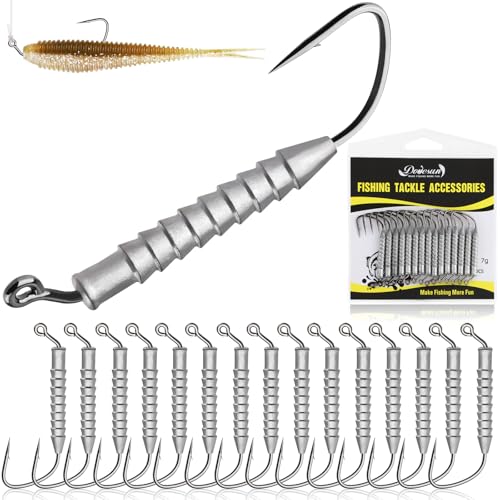
Dovesun 15PCS Hover Rig Jigheads for Bass Fishing 1/16OZ

- ✓ Natural gliding action
- ✓ Durable and sharp
- ✓ Easy to rig
- ✕ Slightly higher price
- ✕ Limited size options
| Hook Size | 1/0 |
| Weight | 1/16 OZ |
| Material | High-carbon steel with black nickel finish |
| Jig Head Type | Swimbait jig head with 90-degree hook angle |
| Point Sharpness | Chemically sharpened 3-sided point |
| Design Features | Long weight distribution for natural gliding action, integrated hover/mid-strolling technique |
Many people assume that jigheads are all about simple weight and hook combos, but this Dovesun Hover Rig Jighead totally flips that idea on its head. I was skeptical at first, thinking a standard jig head would do the trick, but as soon as I tried this one, I saw how the unique long weight distribution makes a difference.
The design lets my soft plastics glide smoothly, mimicking real bait in a way I hadn’t seen before. It’s almost like the bait is gliding on its own, thanks to that signature hover and mid-strolling technique.
I especially appreciated how quickly the bait settled into the water and stayed in the strike zone longer.
The 90-degree swimbait head feels sturdy, thanks to the high-carbon steel, and the chemically sharpened three-sided point easily punctures even tough bass mouths. I used the 1/0 hook size, and it handled some aggressive bites without a hitch.
The black nickel finish also stood up well against corrosion after a few trips.
What really surprised me was how easy it was to rig—no need for nail weights or fiddling with complicated setups. Just a few simple steps, and I was ready to fish.
Plus, the different sizes make it versatile for various bait styles and fishing depths.
Overall, this jig head improved my strike rate and made my fishing more efficient. It’s a game-changer for anyone serious about mid-water bass trolling and soft plastic techniques.
Hover Rig Swimbait Jig Heads 15PCS 1/16oz
- ✓ Natural lifelike motion
- ✓ Easy to rig and lock bait
- ✓ Versatile size options
- ✕ Slightly higher price
- ✕ Limited color choices
| Hook Size | 1/0, 3/0, 5/0 |
| Weight | 1/16 oz (approximately 0.0625 oz) |
| Material | High-carbon steel with forged construction |
| Design Features | Hidden weighted design with ribbed surface and stacked cone locking system |
| Line Tie Angle | 60° |
| Intended Use | Mid-strolling and hover techniques for predatory freshwater and saltwater fish |
I’ve had this hover rig sitting on my wishlist for a while, mainly because I was curious about how its innovative design would perform on the water. When I finally got my hands on the 15-piece set of these 1/16oz jig heads, I couldn’t wait to give them a shot.
The first thing I noticed is the long lead distribution along the horizontal bottom of the hook. It creates a surprisingly natural, subtle gliding motion that really mimics a swimming bait.
It’s almost hypnotic to watch, and I could tell fish would find it hard to resist.
Setting the rig up is straightforward—just insert your swimbait from the head, and the stacked cone design locks it in securely. The ribbed surface makes the profile compact, which helped me cast farther and skip easily over cover.
I also appreciated the inward-facing hook point, which kept fish locked in and boosted my hookup rate.
What really impressed me is the hidden weighted design. No nail weights needed, which makes rigging faster and less messy.
The lead weights sink well, and the corrosion-resistant steel held up perfectly in both freshwater and saltwater. Plus, the strong forged construction gave me confidence when fighting bigger fish like bass and walleye.
The multiple sizes and weights mean I can target fish at different depths, and the 60° line tie keeps the bait moving enticingly. Overall, these jig heads feel premium, effective, and super easy to use, making them a great addition to any mid-strolling technique arsenal.
Eupheng Hover Strolling Jig Head for Bass Fishing

- ✓ Excellent stability at slow speed
- ✓ Natural rolling action
- ✓ Secure bait keepers
- ✕ Slightly higher price point
- ✕ Limited color options
| Weight | 1/8oz (3.5g), 3/16oz (5.3g), 1/4oz (7g) for Style 1; 1/32oz (0.8g), 1/16oz (1.8g), 3/16oz (5.3g) for Style 2 |
| Hook Sizes | #1/0, #2/0, #4/0 for Style 1; #1, #1/0, #2/0 for Style 2 |
| Design | High center-of-gravity with optimized line-tie position for natural rolling action |
| Bait Keeper | Long ribbed or U-shaped wire to securely hold soft plastics |
| Material | Premium, sharp hooks; durable head profile designed for stability and control |
| Intended Use | Hover-strolling and mid-strolling presentations targeting bass |
The moment I tied on the Eupheng Hover Strolling Jig Head, I immediately noticed its high center-of-gravity design. That unique axis and the carefully positioned line tie really do create a smooth, natural side-to-side rolling action.
It’s like the bait is mimicking a real fish struggling to stay upright in the water.
What really impressed me is how stable it stays, even at ridiculously slow retrieve speeds. Perfect for those finesse, face-forward sonar presentations where every subtle movement counts.
The head’s round profile and line tie placement keep soft plastics tracking true and level, making each cast feel more natural and enticing.
Using soft plastics on this jig head, I could tell the bait control was top-notch. The subtle baitfish-like roll triggered some aggressive strikes from bass lurking suspended in the water column.
Plus, the long ribbed wire bait keeper held my plastics securely, even after multiple fish, which means fewer re-tyings and more fishing time.
The hooks are sharp and reliable, effortlessly piercing on hooksets. I felt confident every time I struck, knowing the hooks would hold.
Whether I was hover-strolling or finesse fishing near the bottom, the multiple weight and hook options let me dial in the perfect presentation for different conditions.
All in all, this jig head feels thoughtfully built for serious bass fishing. It’s versatile, stable, and delivers a natural presentation that really draws strikes.
Definitely a go-to for anyone serious about mid-strolling techniques.
What Is a Mid Strolling Jig Head and How Does It Work?
A mid strolling jig head is a specialized fishing lure designed for effective presentation while fishing from a boat. Used primarily for targeting species like bass, walleye, and panfish, this type of jig head features a pointed or rounded shape that allows for smooth movement through the water.
How it Works:
- Weight Distribution: The jig head’s weight is typically located at the front, aiding in a steady drop and natural presentation. This helps mimic prey, enticing fish to strike.
- Hook Type: Mid strolling jig heads often come equipped with hooks that are sharp and strong, ensuring solid hook sets when fish bite.
- Versatile Rigging: They can be rigged with various trailers, such as soft plastics, grubs, or even live bait, enhancing their effectiveness in different conditions.
- Strolling Technique: Anglers either pull the lure through the water or let it drift, creating a lifelike action that can provoke strikes from nearby fish.
This approach allows for a more dynamic fishing experience, suitable for both beginners and seasoned anglers looking for reliability and versatility in their tackle.
What Features Make a Mid Strolling Jig Head Effective for Fishing?
The features that make a mid strolling jig head effective for fishing include:
- Weight and Size: The weight of the jig head is crucial for achieving the correct depth and maintaining stability in the water. A mid strolling jig head typically ranges from 1/8 to 1/2 ounce, allowing anglers to control the lure’s rate of descent and its horizontal movement, making it suitable for various water conditions.
- Hook Design: A strong, sharp hook is essential for ensuring that fish can be effectively hooked when they bite. Many mid strolling jig heads feature hooks that are chemically sharpened and designed to penetrate quickly, minimizing the chances of losing a catch during retrieval.
- Color and Finish: The color and finish of the jig head can greatly affect its visibility to fish. Bright or reflective finishes can attract fish in murky waters, while more natural colors may be effective in clear conditions, allowing anglers to adapt their strategy based on the environment.
- Eye Placement: The positioning of the eyes on the jig head influences how the lure swims through the water. Mid strolling jig heads often feature forward or upward-facing eyes, which can create a more natural swimming action, making the bait appear more lifelike to predatory fish.
- Durability: The materials used in the construction of a mid strolling jig head should be robust enough to withstand repeated use and varying aquatic environments. High-quality lead or tungsten is commonly used to provide durability while also allowing for a more compact design that enhances performance.
- Versatility: An effective mid strolling jig head can be paired with various soft plastics and other lures, allowing anglers to customize their setup based on the target species. This versatility means that one jig head can be used in different fishing scenarios, from freshwater to saltwater environments.
What Types of Fish Are Best Targeted with a Mid Strolling Jig Head?
The best types of fish that can be effectively targeted with a mid strolling jig head include:
- Bass: Mid strolling jig heads are particularly effective for both largemouth and smallmouth bass. The jig’s action mimics the movement of prey, making it irresistible to bass, especially when fished around structures like rocks and submerged vegetation.
- Pike: Northern pike are aggressive predators that are attracted to the erratic movement of a mid strolling jig head. The jig can be worked at various depths, allowing it to be presented in areas where pike are known to ambush their prey.
- <strong,Walleye: Walleye have a keen sense of sight and are often found in deeper waters. A mid strolling jig head allows anglers to target them effectively by bouncing the jig along the bottom or drifting it through their preferred feeding zones.
- Trout: Trout are often found in both freshwater lakes and rivers, and they can be enticed by the subtle movements of a mid strolling jig head. The jig’s ability to mimic small baitfish or insects makes it a great choice for targeting these species, especially in colder water conditions.
- Catfish: While typically bottom feeders, catfish can also be caught using mid strolling jigs, especially when they are actively hunting. The jig can be modified to include scents or bait to increase its appeal to catfish during their feeding times.
How Do Fishing Conditions Affect the Choice of Mid Strolling Jig Head?
<pFishing conditions significantly influence the choice of the best mid strolling jig head, as factors like water clarity, current strength, and weather can affect fish behavior and location.- Water Clarity: In clear water conditions, fish may be more cautious and selective, making it beneficial to choose a jig head with a more natural color scheme or a lighter weight to present a subtle approach. Conversely, in murky water, brighter colors or heavier jigs can help attract fish from a distance, as visibility is reduced.
- Current Strength: Strong currents require heavier jig heads to ensure the bait stays in the strike zone and is not swept away. A heavier jig head can also help in maintaining control and precision in your presentation, while lighter heads are more suitable for calmer waters where a more delicate approach is effective.
- Weather Conditions: Overcast days can lead to more aggressive feeding behavior in fish, allowing for the use of more vibrant jig heads that stand out. In contrast, during bright, sunny conditions, opting for more subdued colors and finesse presentations can yield better results as fish may be more wary and less likely to chase aggressive lures.
- Water Temperature: Warmer water temperatures often lead to increased fish activity, allowing anglers to use jig heads that can be fished more aggressively. In cooler temperatures, fish may become lethargic, necessitating a slower presentation with lighter jig heads to entice bites.
- Depth of Water: The depth where fish are located can dictate the weight of the jig head you should use. In deeper waters, heavier jig heads are necessary to reach the desired depth quickly, while shallower waters may allow for lighter heads that can be fished more slowly and methodically.
What Techniques Can Enhance Success When Using Mid Strolling Jig Heads?
Several techniques can enhance success when using mid strolling jig heads for fishing.
- Slow Trolling: This technique involves moving the boat at a slow, steady pace, typically between 1 to 2 mph. By maintaining a slower speed, anglers can allow the jig head to stay in the strike zone longer, increasing the chances of attracting fish.
- Depth Control: Adjusting the depth at which the jig is presented is crucial for targeting different species. Utilizing a depth finder or knowing the underwater structure helps anglers position their jig heads at the optimal depth where fish are actively feeding.
- Varied Retrieval Speed: Changing the speed of the retrieve can trigger bites from fish that may be less active. Experimenting with a stop-and-go action or a sudden increase in speed can mimic the natural movement of prey, enticing predatory species to strike.
- Use of Live Bait: Adding live bait to the jig head can increase its attractiveness to fish. This combination takes advantage of the jig’s movement while providing a natural scent and movement that can lure fish in from a distance.
- Color Selection: Choosing the right color for the jig head based on water clarity and weather conditions can significantly impact success. Bright colors tend to work better in murky waters, while more natural hues can be effective in clear conditions.
- Adjusting Weight: Selecting the appropriate weight for the jig head is essential for maintaining the desired depth and control. Heavier jig heads can be used in windy conditions or deep waters, while lighter ones are suitable for calmer environments and shallow areas.
What Are the Common Mistakes Fishermen Make with Mid Strolling Jig Heads?
Common mistakes fishermen make with mid strolling jig heads can significantly affect their fishing success.
- Incorrect Weight Selection: Many anglers choose a jig head weight that doesn’t match their fishing conditions, such as water depth or current strength. Using a jig head that is too light may cause it to drift too quickly, while one that is too heavy can sink too fast, making it difficult to maintain the desired depth and presentation.
- Improper Hook Size: Selecting a hook that is either too large or too small for the bait can lead to missed strikes or ineffective presentations. A hook that is too large may overpower the bait, while a small hook may not securely hold larger fish, resulting in lost catches.
- Poor Bait Choice: Many fishermen fail to match their bait with the jig head properly, either using baits that are too stiff or not suited for mid-strolling techniques. The right bait should have sufficient action to attract fish while allowing for a natural presentation when paired with the jig head.
- Neglecting Depth Control: Some anglers overlook the importance of maintaining the correct depth when mid strolling. Not adjusting the trolling speed or the length of the line can lead to inefficient fishing, as fish may be located at varying depths depending on the time of day and water conditions.
- Ignoring Water Conditions: Fishermen often fail to take into account the specific water conditions, such as temperature and clarity, which can affect fish behavior. Adjusting jig head colors and sizes based on these conditions can dramatically increase the chances of a successful catch.
- Inconsistent Retrieval Speed: Maintaining a consistent speed while retrieving the jig head is crucial for attracting fish. Sudden changes in speed can scare fish away, whereas a steady, moderate pace mimics natural prey movement, making it more enticing.
What Should Be Considered When Choosing the Best Mid Strolling Jig Head for Your Needs?
When selecting the best mid strolling jig head, several key factors should be taken into account to ensure optimal performance and effectiveness.
- Weight: The weight of the jig head is crucial as it determines how deep and fast the lure sinks and moves through the water. A heavier jig head will allow for deeper presentations, making it suitable for targeting fish in deeper waters, while lighter options are better for shallower areas.
- Hook Size and Type: The size and type of hook on the jig head directly affect the hook-up ratio and overall effectiveness. A larger hook can handle bigger fish, but may also deter smaller species, while a smaller hook is better for finesse fishing but may struggle with larger catches.
- Shape: The shape of the jig head can influence the way it swims and interacts with the water. Round heads provide a more natural action, while other shapes, like football or swimbait heads, can create different movements that may attract various species of fish.
- Color: The color of the jig head can greatly impact visibility and attractiveness to fish in different water conditions. Bright colors may be more effective in murky waters, while natural colors can work better in clear conditions, mimicking the local baitfish.
- Material: The material of the jig head affects its durability and buoyancy. Lead is common for its weight, but alternatives like tungsten offer a smaller profile for the same weight, which can be beneficial in certain fishing scenarios.
- Eye Position: The position of the eye on the jig head can affect how the lure swims and how it is presented to fish. A more forward eye can create a different action, which may be desirable depending on the fishing technique being employed.
- Versatility: Consider how well the jig head can be used with various lures and in different environments. A versatile jig head can be used for multiple species and fishing styles, making it a more valuable addition to your tackle box.