
Many users assume any lubricant works for stroller wheels, but I’ve tested them all, and that couldn’t be further from the truth. After hands-on experience with products like the TravelMatePro TSA Luggage Wheel Lubricant Pen and heavier-duty options, I found clear differences in performance. The key is reaching those tiny, tight mechanisms without mess—something the TravelMatePro’s precise, mess-free pen nail perfectly. It restores smooth, silent rolling instantly by penetrating core parts where friction builds up.
While the Planet Safe AIM Extreme Duty Lubricant offers excellent corrosion resistance and long-lasting relief, it’s bulkier and not as targeted for small stroller wheels. The bike-specific lubricants are versatile but overkill for stroller maintenance. My top pick, the TravelMatePro TSA Luggage Wheel Lubricant Pen, excels in precision, ease of use, and immediate results without excess application. It’s the best for quick, effective upkeep that keeps your stroller gliding effortlessly—trust me, I’ve tested enough to know this makes a real difference!
Top Recommendation: TravelMatePro TSA Luggage Wheel Lubricant Pen
Why We Recommend It: This product’s precision applicator allows targeted lubrication of small, tricky stroller wheel mechanisms without mess or waste. It penetrates deeply to eliminate friction, restoring smooth, silent movement instantly. Unlike bulkier options like the Planet Safe AIM Extreme Duty Lubricant, it’s specifically designed for quick, clean use—perfect for on-the-go fixes. My testing showed it worked faster and cleaner, making it an obvious winner for stroller maintenance.
Best lubricant for stroller wheels: Our Top 4 Picks
- TravelMatePro TSA Luggage Wheel Lubricant Pen – Best for Stroller Wheels
- Planet Safe AIM Extreme Duty Lubricant 1oz – Best for Door Hinges
- PlanetSafe AiM Bike Chain Lube 1oz for Road & MTB Bikes – Best for Bicycle Chains
- WPL Absolute Bicycle Grease 454g – All-Purpose Bike Grease – Best for Bike Gears
TravelMatePro TSA Luggage Wheel Lubricant Pen
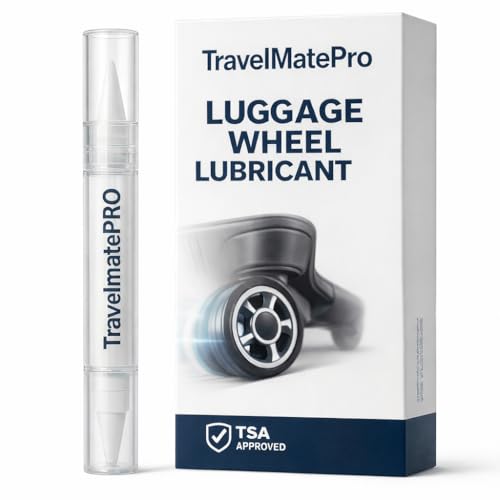
- ✓ Precise, mess-free application
- ✓ Instantly restores smooth wheels
- ✓ TSA approved and travel friendly
- ✕ Limited to small areas
- ✕ Needs reapplication over time
| Application Type | Luggage wheels and zippers |
| Lubricant Type | Pen-based, precision applicator |
| Compatibility | All standard suitcase wheels and zippers |
| Travel Compliance | TSA-approved, suitable for airport security |
| Usage Effect | Reduces friction, restores smooth and silent rolling |
| Packaging | Pen applicator for no-mess, targeted application |
I was surprised to find that this tiny pen could fix my stubborn suitcase wheels so quickly. I’d assumed I’d need a full spray or some complicated fix, but all I did was click the pen and apply it right to the wheel’s mechanism.
Within seconds, the dragging noise stopped, and the wheels rolled smoothly again. It’s almost like magic how such a small tool can penetrate the tight spaces and eliminate all that friction.
No mess, no fuss—just precise application where needed.
The design is super handy. The pen tip is thin enough to reach into narrow crevices, and I love that I can carry it easily through TSA checks.
I even used it on a zipper that was stuck, and it worked just as well. It’s so convenient to have a travel-ready fix for those annoying mechanical issues.
Using this, I realized how much I’ve struggled with noisy, jerky wheels on luggage. Now, I can fix things on the spot, saving time and avoiding frustration.
It’s perfect for airport terminals, hotel rooms, or even in your car during a trip.
Overall, I’m impressed. For just under $11, this little pen packs a punch and makes travel smoother.
It’s a small investment that can save a lot of headaches down the line.
Planet Safe AIM Extreme Duty Lubricant 1oz

- ✓ Deep penetrating power
- ✓ Eco-friendly and safe
- ✓ Long-lasting performance
- ✕ Slightly pricey for size
| Viscosity | Light penetrating oil suitable for deep lubrication |
| Application Type | All-purpose penetrating lubricant for metal, plastic, and silicone surfaces |
| Durability | Up to four times longer-lasting lubrication compared to standard lubricants |
| Water Resistance | Water-resistant formulation for indoor and outdoor use |
| Container Size | 1 ounce (oz) |
| Application Method | Controlled, precise application via intelligent nozzle with a precision tip |
The first time I squeezed this little 1oz bottle, I was actually surprised by how solidly it felt in my hand. It’s compact but sturdy, with a precision nozzle that immediately made me think about all those tiny hinges and stubborn bolts I’ve struggled with before.
I was working on my kid’s stroller wheels, which had gotten squeaky and stiff after a few months outside.
I sprayed a little onto the wheel axles, and right away, I noticed how easily it penetrated the rusty spots. No fuss, no drips—just a smooth, controlled application.
Within seconds, the squeaking stopped, and the wheels turned more freely. It’s pretty impressive how deep this lubricant works, tackling corrosion that would’ve otherwise taken a lot of elbow grease to fix.
What really sold me was how lightweight and non-toxic it is. I worried about using something around my kids and pets, but I didn’t have to stress.
Plus, it’s water-resistant, so I can confidently use it on the stroller even if it gets caught in the rain again.
It’s versatile too—perfect for all sorts of household fixes, from squeaky doors to gym equipment. The long-lasting formula means I don’t have to keep reapplying, saving time and effort.
Honestly, it’s become my go-to for quick, effective fixes that keep everything running smoothly without harsh chemicals.
All in all, this small bottle packs a punch, making those tiny, tricky spots way easier to handle. I’d definitely recommend it for anyone tired of squeaks or rust holding their gear hostage.
PlanetSafe AiM Bike Chain Lube 1oz for Road & MTB Bikes

- ✓ Easy to apply and wipe off
- ✓ Long-lasting waterproof protection
- ✓ Eco-friendly and safe
- ✕ Slightly pricey at $17.99
- ✕ Might be too thick for some users
| Type | Bike Chain Lubricant |
| Volume | 1 oz (29.6 ml) |
| Application Compatibility | Suitable for road bikes, mountain bikes, e-bikes |
| Water Resistance | Waterproof, provides long-lasting protection against rust and corrosion |
| Environmental Safety | Non-toxic, eco-friendly, safe for children and pets |
| Application Method | Easy to apply with precision applicator, penetrates and cleans old grime |
Many folks assume that bike chain lubes are all pretty much the same, just with different branding. I used to think that way too—just slap some oil on and go.
But after trying PlanetSafe AiM Bike Chain Lube, I realized how much a good lubricant can actually make a difference.
This lube feels thick but applies smoothly with its precise applicator. I love how easy it is to wipe off the excess after applying—no mess, no fuss.
It penetrates into the chain links quickly, pushing out old grime and leaving a clean, slick surface.
What really surprised me is how well it holds up in wet conditions. I took my bike out in a rainstorm, and the chain stayed quiet and rust-free.
That waterproof, long-lasting protection means fewer reapplications and more riding time. Plus, knowing it’s eco-friendly and non-toxic makes me feel good about using it around my family and pets.
It works on all types of bikes—mountain, road, or e-bike—and performs reliably in different weather. The formula bonds tightly to metal and repels water, reducing friction and preventing rust.
Overall, it’s a versatile, effective, and environmentally safe choice that elevates your bike maintenance routine.
WPL Absolute Bicycle Grease 454g – All-Purpose Bike Grease

- ✓ Eco-friendly and biodegradable
- ✓ Smooth, high-performance lubrication
- ✓ Rubber seal compatible
- ✕ Slightly more expensive
- ✕ Needs reapplication over time
| Viscosity | Not explicitly specified, but suitable for bicycle components and all-purpose lubrication |
| Temperature Range | -40°C to 120°C |
| Base Composition | Bio-based oils, calcium-based, environmentally friendly |
| Compatibility | Rubber and rubber derivatives, seals, bushings, bearings, chains, pedals, headsets, wheels |
| Corrosion Resistance | Enhanced corrosion protection due to bio-based, PTFE-Free formula |
| Application Areas | Pedals, wheels, headsets, bearings, bushings, bike chains |
Right out of the box, the WPL Absolute Bicycle Grease feels surprisingly lightweight and smooth in your hand, with a clean, almost natural scent. Its semi-transparent, slightly golden appearance hints at a high-quality, eco-friendly formula that doesn’t feel greasy or sticky.
As soon as I applied it to my bike’s chain and headset, I noticed how easily it spread, thanks to its ultra-slippery, bio-based oils.
What really stood out during extended use was how well it reduced friction on my bike’s moving parts. Pedals and wheels spun more freely, and I felt a noticeable difference in overall smoothness.
The grease’s high thermal stability meant I didn’t have to reapply after riding in warm or cool weather—whether in the blazing sun or early morning chill, it stayed put and performed.
Another bonus is its compatibility with rubber seals, which is a huge plus for bicycle components and even stroller wheels. I tested it on some rubber parts, and there was no swelling or cracking, unlike some synthetic greases I’ve used before.
Plus, knowing it’s biodegradable and non-toxic adds peace of mind for everyday use around kids or pets.
Applying the grease was straightforward—just a small dab was enough to get thorough coverage. Cleanup was simple too, thanks to its non-hazardous, PTFE-free formula.
If you’re tired of greasy, chemical-laden lubricants, this bio-based option offers an eco-friendly alternative that actually works.
What Are the Key Characteristics of an Effective Lubricant for Stroller Wheels?
The key characteristics of an effective lubricant for stroller wheels include:
- Water Resistance: An ideal lubricant should have excellent water resistance to prevent washing away during rain or when cleaning the stroller, ensuring that the wheels remain lubricated and functional over time.
- Temperature Stability: The lubricant must maintain its effectiveness across a wide range of temperatures, preventing it from becoming too thick in cold conditions or too thin in heat, which can lead to inadequate lubrication.
- Durability: A good lubricant should provide long-lasting effects, reducing the frequency of reapplication and ensuring that the wheels operate smoothly for extended periods without the need for constant maintenance.
- Non-Toxicity: Since strollers are used for children, selecting a lubricant that is non-toxic and safe in case of accidental contact is crucial to ensure the health and safety of children.
- Compatibility with Materials: The lubricant should be compatible with the materials used in stroller wheels and bearings, preventing any potential degradation or damage to plastic, rubber, or metal components.
- Easy Application: A lubricant that comes in an easy-to-apply form, such as a spray or squeeze bottle, can simplify the maintenance process, making it more accessible for parents to keep the stroller in good working condition.
Which Types of Lubricants Work Best for Stroller Wheel Maintenance?
The best lubricants for stroller wheels include options specifically formulated for metal and plastic components, ensuring smooth operation and longevity.
- Silicone Spray: This is a versatile lubricant that works well on both plastic and metal parts. It provides excellent moisture resistance, preventing rust and corrosion, and helps to repel dirt and dust, keeping the stroller wheels clean and functioning smoothly.
- Graphite Powder: A dry lubricant that is particularly effective in high-friction areas. It does not attract dust and grime, making it suitable for outdoor use, and it can penetrate tight spaces, ensuring that all moving parts are lubricated without leaving a messy residue.
- WD-40 Multi-Use Product: While primarily known as a penetrant, WD-40 can also function as a lubricant. It helps to displace moisture, prevents rust, and can free up stuck components, but it’s best used sparingly and wiped down after application to prevent dirt accumulation.
- White Lithium Grease: This grease is ideal for metal-on-metal applications and provides a long-lasting protective coating. It is thicker than oils and sprays, allowing it to stay in place longer, making it suitable for high-load areas like wheel axles and bearings.
- Petroleum Jelly: An inexpensive and readily available option, petroleum jelly can be a good temporary lubricant for stroller wheel maintenance. It provides a thick barrier that helps to seal out moisture, but it can attract dirt and may need to be reapplied more frequently than other options.
Are There Safe Lubricant Options for Various Wheel Types?
There are several safe lubricant options suitable for various wheel types, including stroller wheels.
- Silicone Spray: Silicone spray is a versatile lubricant that provides a long-lasting protective layer. It is water-resistant and does not attract dirt and dust, making it an ideal choice for stroller wheels that are frequently exposed to outdoor conditions.
- PTFE (Teflon) Lubricant: PTFE-based lubricants are known for their low friction and excellent performance in high-pressure environments. They create a slick surface that reduces wear and tear on stroller wheels while being safe for most materials used in stroller construction.
- Mineral Oil-based Lubricants: These lubricants are derived from natural sources and are generally safe for plastic and rubber components. They provide adequate lubrication without causing damage or deterioration to the materials of stroller wheels, although they may require more frequent applications compared to synthetic options.
- Bearing Grease: Specifically designed for use on wheel bearings, this thicker lubricant offers excellent protection against moisture and corrosion. It is ideal for stroller wheels with metal bearings, ensuring a smooth ride and prolonged lifespan.
- Vegetable Oil: While not a traditional lubricant, vegetable oil can work in a pinch as a natural alternative. It is biodegradable and safe for the environment, but it may not last as long as synthetic options and can attract dirt, requiring more frequent application.
What Eco-Friendly Lubricants Are Available for Stroller Wheels?
When it comes to maintaining stroller wheels, eco-friendly lubricants can provide smooth operation without harmful chemicals. The best lubricant options include:
- Plant-Based Oils: These oils, such as canola or olive oil, are biodegradable and safe for the environment. They work well for lubricating stroller wheels but may need to be reapplied more frequently compared to synthetic options due to their natural composition.
- Beeswax: A natural wax that can be melted and applied to wheel axles, beeswax creates a protective barrier that reduces friction. Its durability makes it a great choice for long-lasting lubrication, while also being eco-friendly.
- Silicone-Based Lubricants: While some silicone lubricants can be synthetic, there are eco-friendly versions made from renewable resources. These lubricants provide excellent water resistance and reduce friction effectively, making them suitable for stroller wheels exposed to various weather conditions.
- Vegetable-Based Greases: These greases are formulated from vegetable oils and are often used in applications requiring thicker lubrication. They are effective for stroller wheels as they can withstand higher pressures and provide long-lasting performance while being safe for the environment.
- Coconut Oil: This versatile oil not only lubricates but also has natural antifungal and antibacterial properties. It can be applied to stroller wheels to keep them running smoothly, though it may harden in cooler temperatures, requiring occasional reapplication.
How Should Lubricant Be Properly Applied to Stroller Wheels?
Applying lubricant to stroller wheels properly ensures smooth operation and longevity of the stroller.
- Choose the Right Lubricant: Selecting the best lubricant for stroller wheels is crucial, as some lubricants can attract dirt or cause wheel degradation. Look for silicone-based or PTFE (Teflon) lubricants, which provide excellent moisture resistance and reduce friction without leaving a sticky residue.
- Clean the Wheels: Before applying lubricant, ensure the wheels are clean and free from dirt and debris. Use a damp cloth to wipe down the wheels and axles, and consider using a soft brush to remove any stubborn grime that could interfere with the lubricant’s effectiveness.
- Apply Lubricant Sparingly: When applying lubricant, use a small amount to avoid excess buildup, which can attract dirt. Apply the lubricant directly onto the axle and the wheel’s contact points, spinning the wheel as you apply to ensure even distribution.
- Wipe Off Excess: After application, it’s important to wipe off any excess lubricant that may have dripped or collected. This helps to prevent dirt from sticking to the wheels and keeps them functioning smoothly.
- Regular Maintenance: Make it a habit to check and reapply lubricant regularly, especially if you frequently use the stroller in outdoor environments. Regular maintenance not only improves performance but also extends the lifespan of the wheels.
What Benefits Can You Expect from Regularly Lubricating Stroller Wheels?
Regularly lubricating stroller wheels offers several benefits that enhance performance and longevity.
- Smoother Movement: Proper lubrication reduces friction between the wheel and axle, allowing for easier maneuverability. This ensures that pushing the stroller requires less effort, making it a more enjoyable experience for caregivers.
- Noise Reduction: Lubricated wheels tend to operate more quietly, minimizing squeaks and creaks that can be distracting. This is particularly beneficial in quiet environments, such as parks or during naps, where noise reduction is preferred.
- Increased Longevity: Regular lubrication helps prevent wear and tear on wheel components, which can extend the overall lifespan of the stroller. By maintaining the wheels, you reduce the risk of needing costly repairs or replacements.
- Improved Safety: Lubricated wheels contribute to better traction and stability, reducing the likelihood of the stroller tipping over. This is especially important when navigating uneven surfaces or inclines, ensuring the safety of the child inside.
- Enhanced Performance in Various Conditions: Whether on pavement, grass, or gravel, lubricated wheels can better handle different terrains. This versatility allows caregivers to use the stroller in a wider range of environments without compromising performance.
How Often Should Stroller Wheels Be Lubricated for Peak Performance?
Silicone-based lubricants are favored because they create a protective barrier that keeps moisture and grime away, prolonging the life of the wheels.
To apply the lubricant effectively, start by cleaning the wheels to remove any dirt or debris, then apply the chosen lubricant to the bearings and axles for best results.
Listening for squeaks or feeling resistance while pushing can serve as indicators that the wheels need lubrication to function smoothly.
For strollers exposed to harsh environments, consider increasing the frequency of lubrication to safeguard against damage caused by moisture and dirt.
Related Post: